
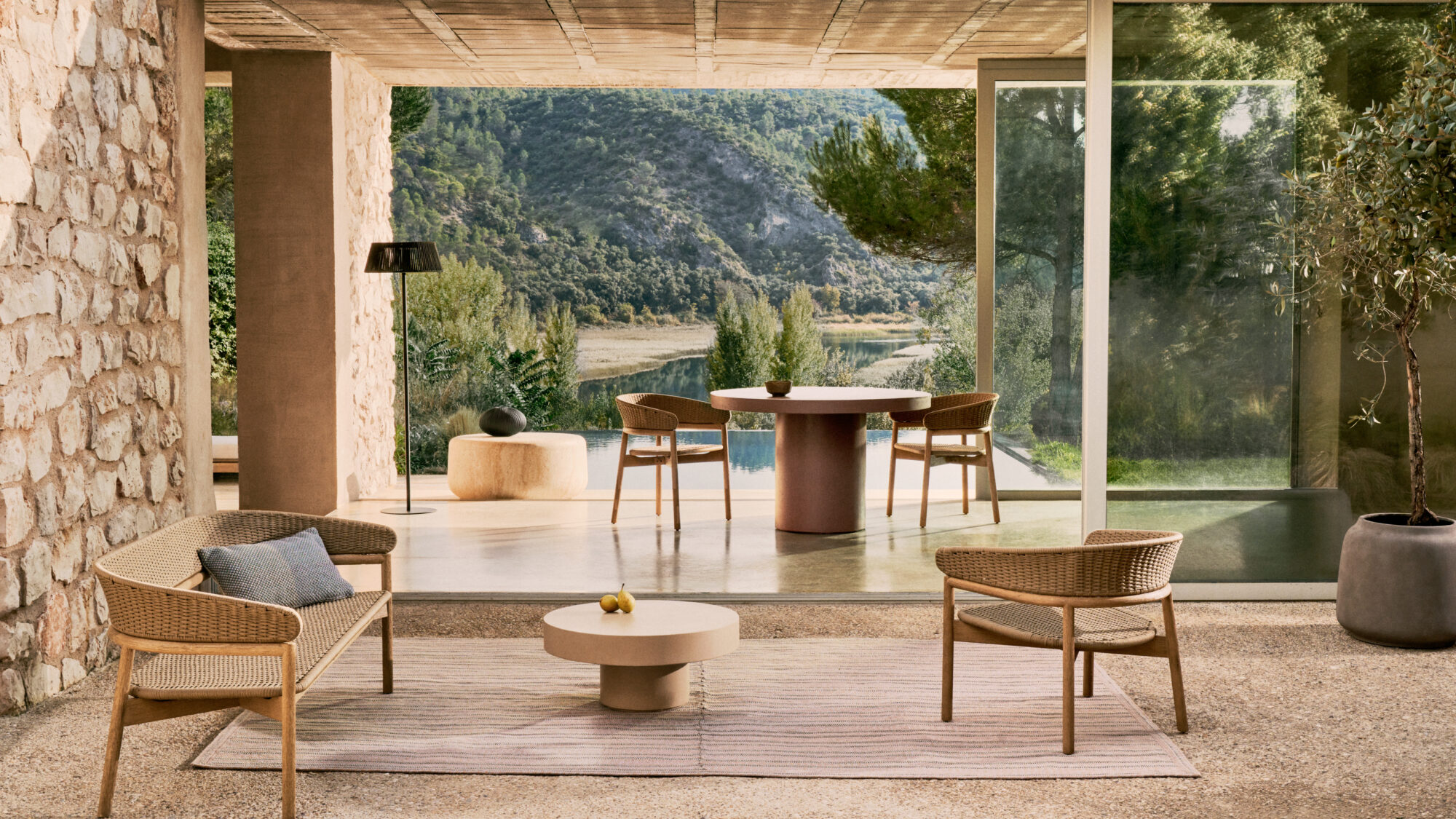

More than ever, we want our outdoor space to feel like a place for comfortable rest, rather than somewhere to sit briefly and leave.
Curved backs in outdoor furniture do a lot of quiet work, both visually and functionally. But what is it that makes them feel so special?
Quiet luxury
The continuous curves make these furniture pieces feel premium without being ‘showy’. You see them a lot in boutique hotels and coastal resorts because the curves feel luxurious and welcoming, which is why they translate so well to residential outdoor spaces.
The craftsmanship that goes into creating curved backs signifies a commitment to quality that you and your guests will inherently feel.
Physical and psychological comfort
The curve follows the natural shape of the body, so in chairs and armchairs, curved backs offer gentle lumbar and side support without needing cushions.
Their embracing, wraparound form also signals comfort and relaxation. A curved back feels protective and enclosing, subconsciously signalling an invitation to sit and stay.
Social orientation
Consider the Arinella armchair, for instance – its shape subtly encourages relaxed conversation.
Curved furniture is perfect for creating soft conversation zones. They don’t point rigidly forward, but rather create a loose circle. It can help bring your guests closer together and focus their attention on each other.
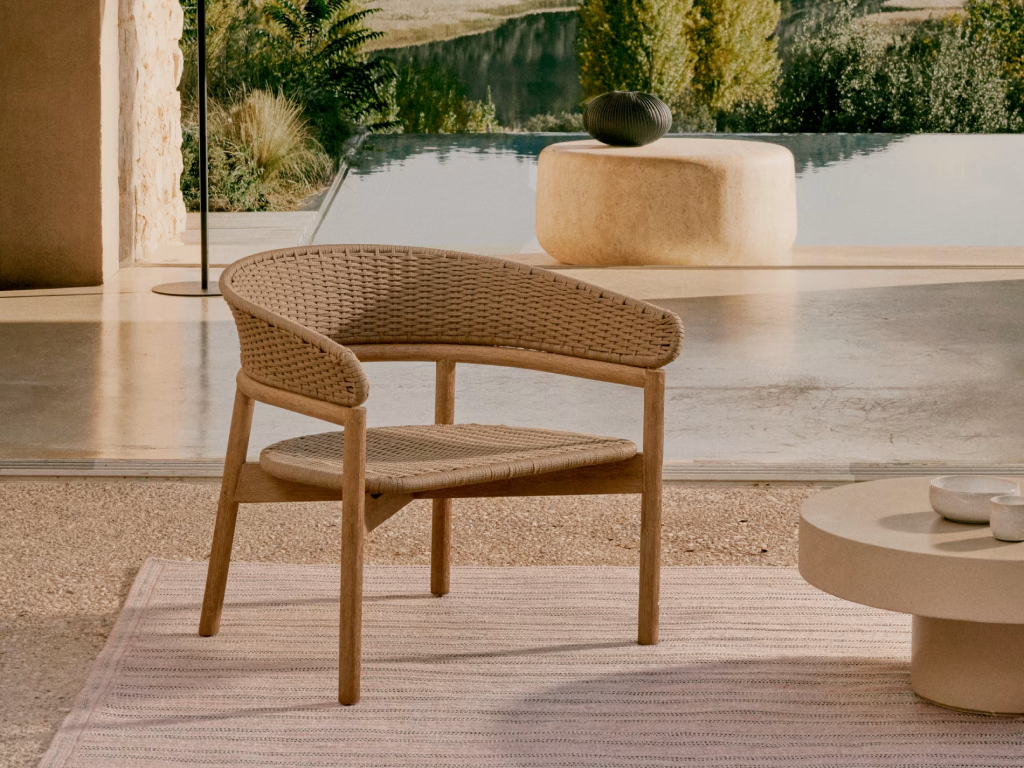
Visual softness
In outdoor areas dominated by hard surfaces like decking, bricks, or concrete, curved furniture softens the composition. The curves reference natural forms rather than straight lines.
They’re also typically crafted using tactile materials and woven textures, aligning with the broader trend towards human, handmade furniture.
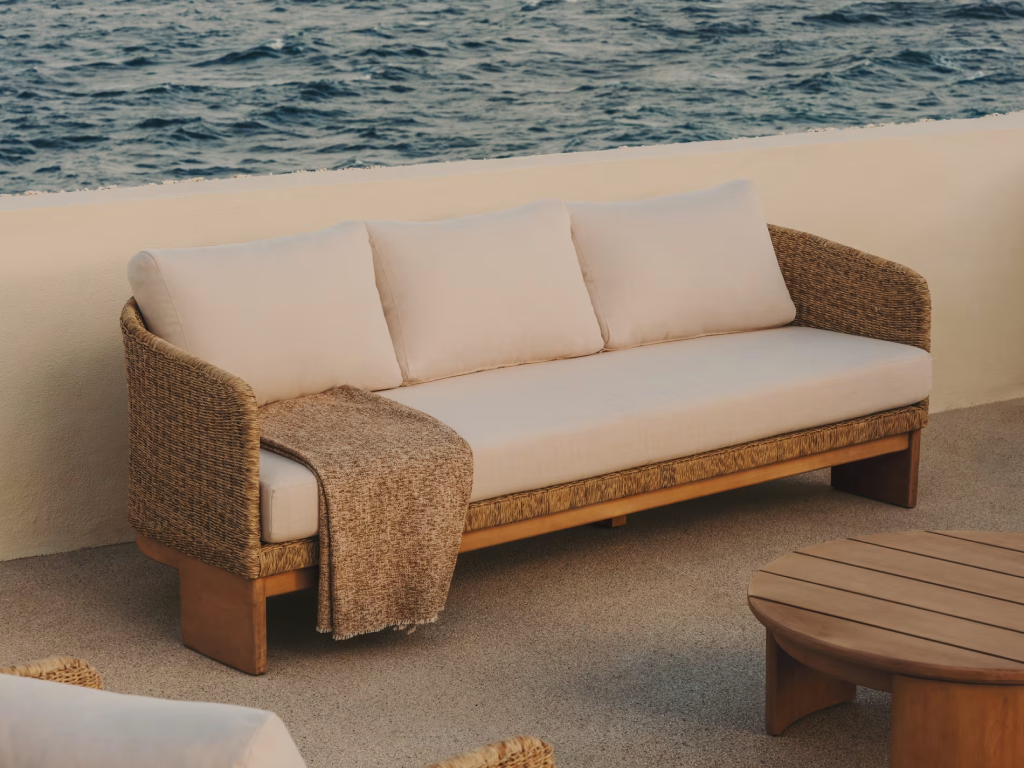
Furniture with curved backs is particularly appealing right now because of its unique combination of structure and softness. The frames feel considered and architectural, but the curve and weave introduce warmth and ease.